
Simulations · Teacher's guide
Appeasement, 1936–1939
Seven teams lead Germany, Britain, France, the Soviet Union, Italy, Poland and Czechoslovakia through five crises, from the Rhineland to Poland. Each student holds one job; the team decides together, negotiates face to face, and lives with the result.
50 minor two periods with a full debrief; Save game between periods
7–28students, 1–4 per country; the computer fills empty jobs
Freesolo practice; the class game is Teacher Plus
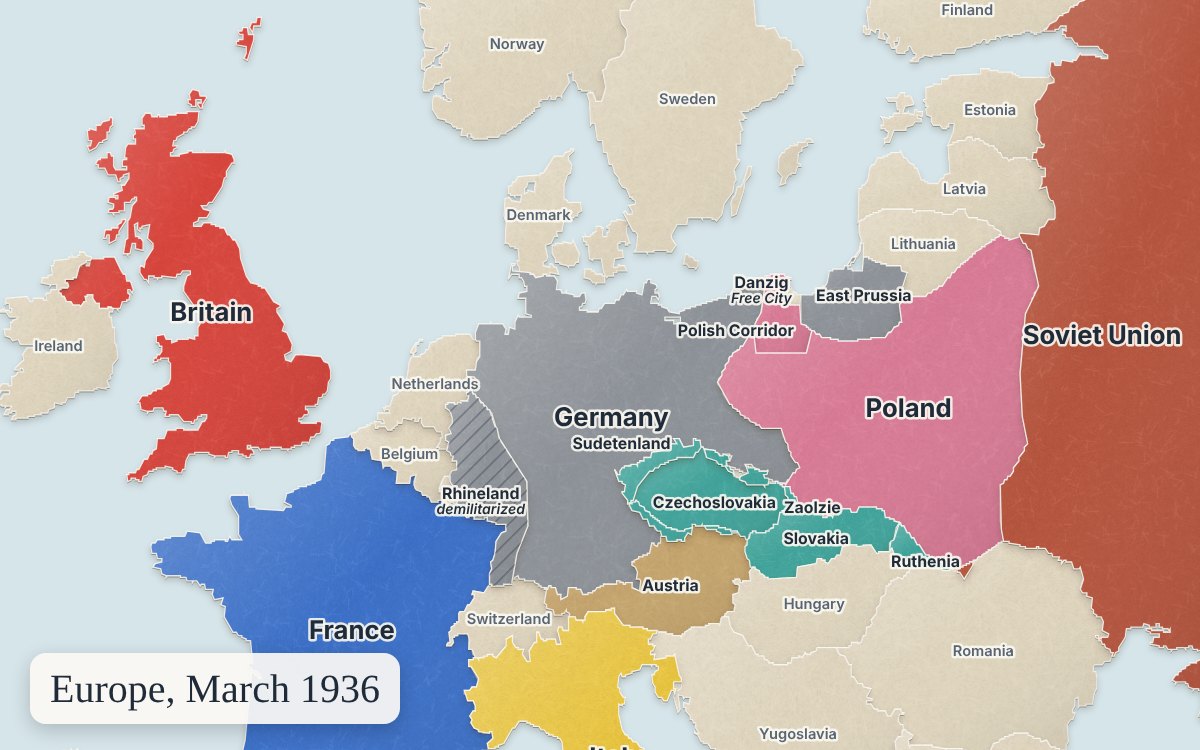
Who sees what
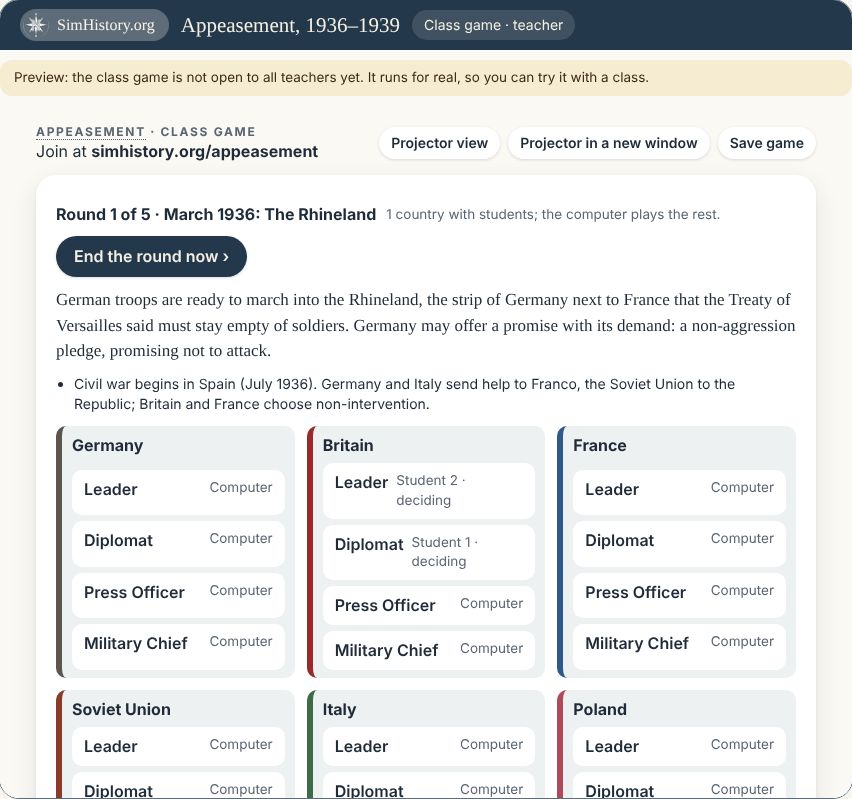
Your screen
- The codes (one per country, or one class code) and the seat board: click two seats to swap students.
- Everything, including the secrets: Germany's real readiness, hidden promises and every team's choices.
- End the round, decide for a team that is stuck, Next round, Save game, the projector.
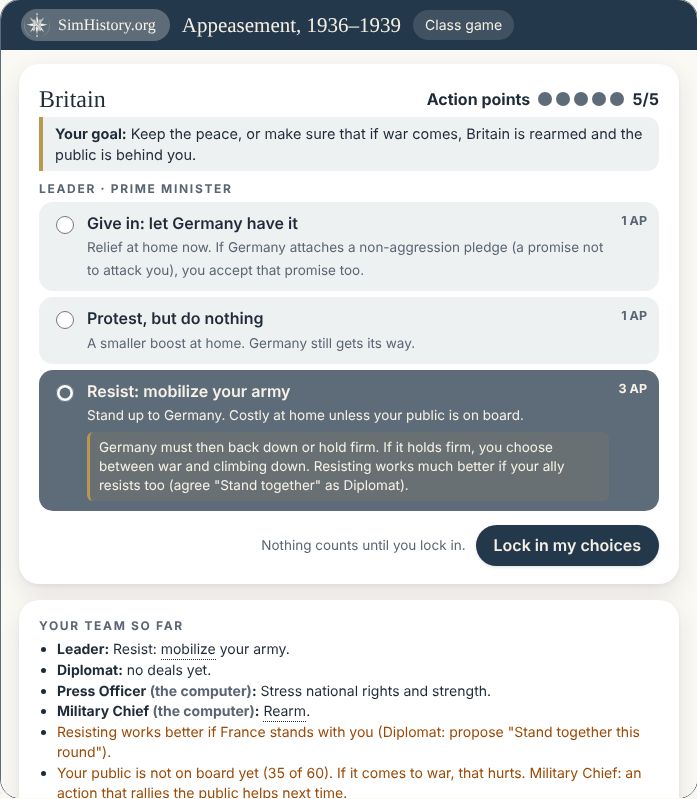
A student's device
- Their job only: the Leader responds to the crisis and answers offers; the Diplomat proposes deals; the Press Officer chooses the story; the Military Chief takes one action.
- Teammates' choices appear live, with hints ("Resisting works better if France stands with you").
- Only their own country's secrets. Lock in; trade jobs with a teammate.
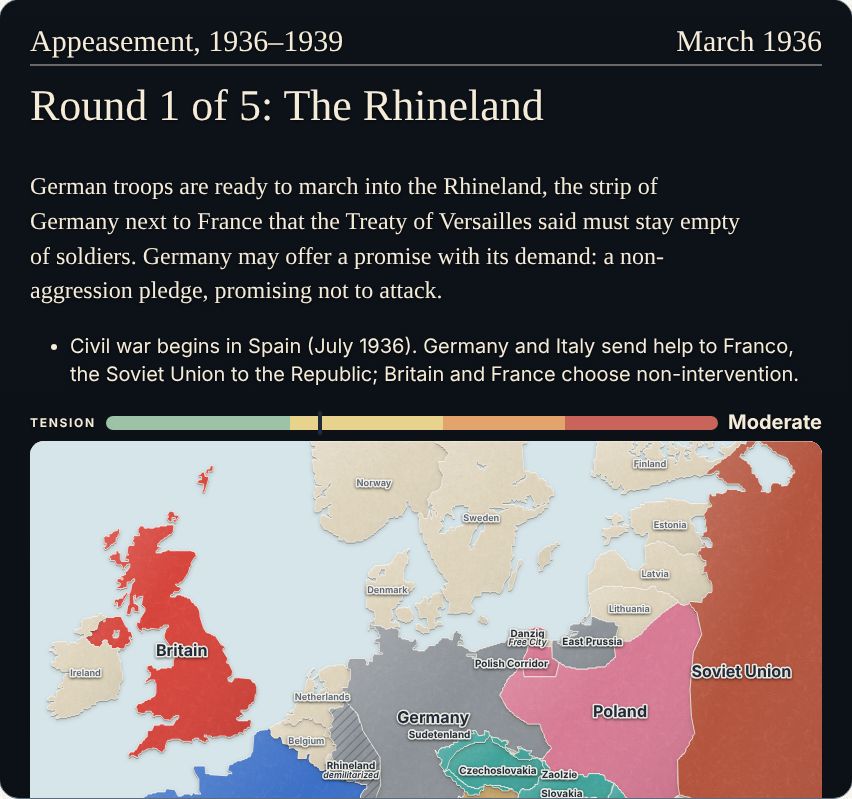
The projector
- The crisis, the tension meter and the map.
- Who has locked in (never names or codes) and the standings.
- Who is deciding in a standoff; after each round, the front pages. Never a secret.
Running the class
- Set upbefore class
- Open the class game. Choose students per country (4 jobs each for up to 28 students; with fewer, one student holds two jobs), and how students get seats: a code for each country (post them to groups), or one class code with random, chosen or teacher-placed seats.
- Leave "the computer plays empty seats" on, so every country acts even when someone is absent. Larger class? Pair two students on one device.
- Seats5 minutes
- Project the case file. Students go to simhistory.org/appeasement, enter their code and read their country's goal. Then click Start: March 1936.
- Each roundabout 8 minutes
- Read the crisis on the projector. Teams decide; Diplomats walk over and negotiate, then send the deal on screen; the other Leader accepts or refuses.
- When the projector shows everyone locked in, click End the round. If anyone resists Germany, the right Leader decides on their device while the class watches the projector ("Britain is deciding: go to war, or climb down?"). Stuck? Let the computer decide.
- Read the front pages aloud and ask one "why?" question.
- Munichround 3
- Pause: "Who is at the table, and who isn't?" Czechoslovakia and the Soviet Union rarely are.
- The reveal10–15 minutes
- Every goal and secret promise, the readiness chart and "what if…". Students answer three debrief questions and download one PDF. Grade the answers, not whether their country met its goal.
- Not finished? Click Save game; next time, Open saved game and students rejoin with the same codes.
Content note. Students may lead Nazi Germany's government. The game models diplomacy, readiness and public opinion; it does not depict the Holocaust, persecution or combat, and German newspapers are labeled propaganda. Privacy. Students never sign in or type a name until their own PDF; your screen shows seats, never names.
First time? Try it side by side to play the teacher and two students at once. The lesson plan has objectives, standards, timing, the answer key and a rubric.